I wasn’t sure whether this thought would piss people off or not, but when it comes to worldbuilding your game and its lore, the less a player has to spend looking for it outside of the game, the better.
After reading a blog post from 2013 by Westin Lee on Thematic Integrity, it made me think a lot about other aspects of narrative consistency and ultimately some of the opposing examples. I’m going to write about what I call Narrative Myopia in another blog post (essentially, the game is so focused on telling one story at the expense of the world that story inhabits), but for this post, I wanted to write about the fragmentation of lore outside of a game’s worldbuilding.
There is a strange philosophical disconnect that the worldbuilding of a game and playing the game itself are two separate experiences. In my mind, more often than not, they’re treated this way, especially with bigger franchises. There’s a tendency to seek out transmedia opportunities in order to make the game lore reach a wider audience, and while it’s not generally a bad strategy, what usually happens is that it becomes a narrative outsourcing tool for the worldbuilding itself.
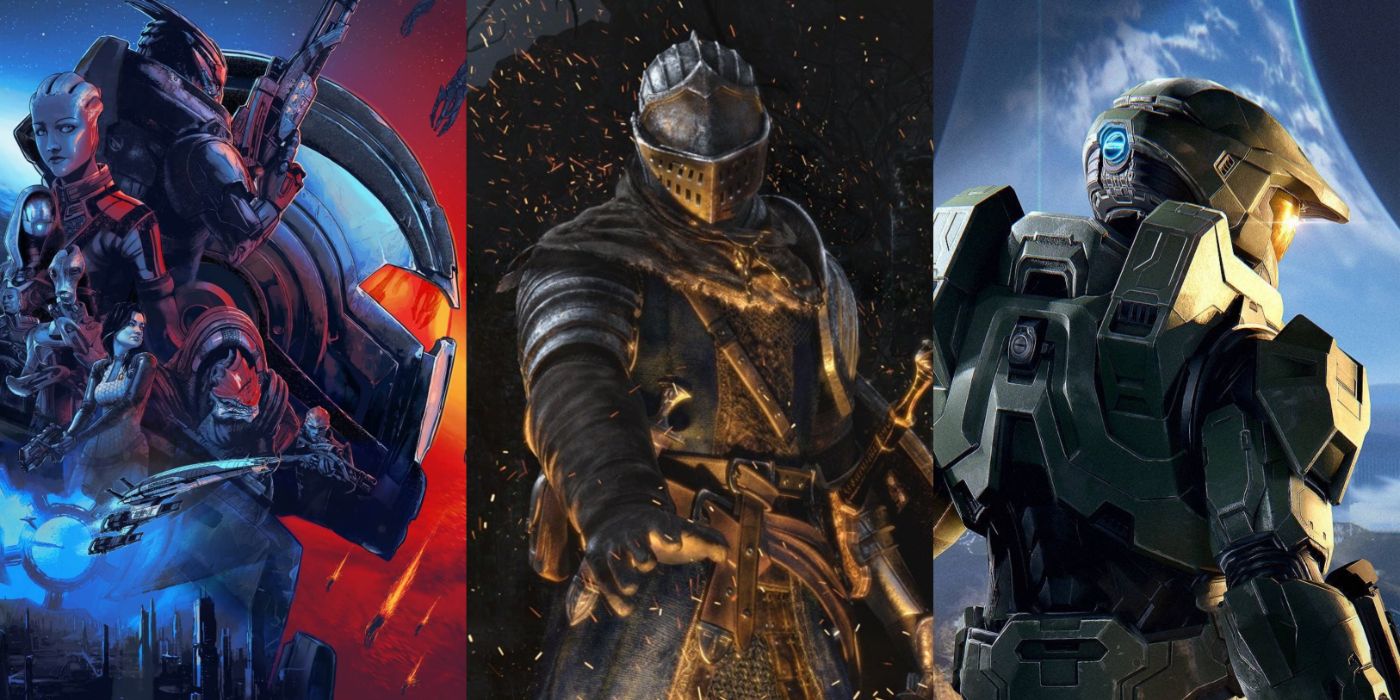
Take Halo as a prime example.
The games themselves tell the same story pretty much over and over across each chapter, but the actual richness of the lore resides elsewhere.
- Halo 2 introduced the Arbiter and the Covenant’s internal politics, which was genuinely rich in lore.
- Halo 3 resolved a plot that the previous games had only partially set up.
- Halo 4 then arrived with a villain, the Didact, whose entire motivation, history, and tragedy were contained in Greg Bear’s Forerunner trilogy novels. Players who hadn’t read them watched a new antagonist appear, shake his fist a lot because he was angry at stuff, and then be defeated with almost no dramatic weight because he hadn’t earned any real significance in the game itself.
- Halo 5 continued this trend with events and character relationships (particularly around Osiris team) rooted in external comics and a film.
The confusing result is that Halo’s story, experienced only through the games, feels totally incoherent and inconsistent (inconsistent aside from the ‘here comes another bad guy worse than the last bad guy’ theme) and not because it was poorly written in isolation, but because most of the game’s lore lives somewhere else.
The Halo games stopped being the main storytelling event and became a victim of narrative displacement, which in turn is a consequence of narrative outsourcing. It creates a dependency on third parties and supplementary media to tell the story, and not everyone has the time, money or the will for it.
Final Fantasy XV could be seen as another example of this problem to a casual player (although arguably there’s nothing casual about keeping up with Final Fantasy!). To understand the opening of the game, we’re expected to watch a feature-length film and an anime series. Without them, those parts told in the game’s story feel a bit jarring and unemotional, and lack the Thematic Integrity that Lee writes about, because the idea of loss just isn’t fully explored within the boundaries of the game.
This is different to franchises using transmedia to tell adjacent stories to make their universe feel alive. You don’t need to engage with any of it to immerse and experience the worldbuilding in the game, but they help to flesh out the lore in other ways without interfering with the main story.
A really good counter to this is Dark Souls. Literally everything is contained within the game itself. The lore is hidden and fragmented, players must discover and unearth it all to build the lore piece by piece. Every item description, every piece of environmental storytelling, every NPC monologue is entirely in the game and self-contained. It’s not available anywhere else.
Dark Souls, therefore, is the only narrative event you need to experience to understand the world and the lore.
Again, I’m not arguing against using other media for worldbuilding and lore, I’m arguing against almost forcing the audience into a position to seek out other material, whether in books, comics, animated shorts or features, to understand the events within the game that they’re experiencing as they’re playing it.
A good way to think about countering this is to consider the idea of a Story Architect, something I discuss in a later post.
Like I said, there’s a link I want to explore between Westin’s Thematic Integrity, Narrative Myopia, and Lore Displacement, which I’ll save for another blog post soon.
Leave a Reply